
On September 24, 2026, “Public Safety” Canada issued a progress report on their efforts to combat anti-Semitism. This report stated that the government committed to:
“…support the recognition, understanding and response to contemporary manifestations of antisemitism, including anti-Zionism, as outlined in the Canadian Handbook on the IHRA Working Definition of Antisemitism.”
This is the first time that the Canadian government has, at least publicly and in writing, claimed that anti-Zionism is a form of anti-Semitism. They follow a few other Western governments in doing this, for example Germany.
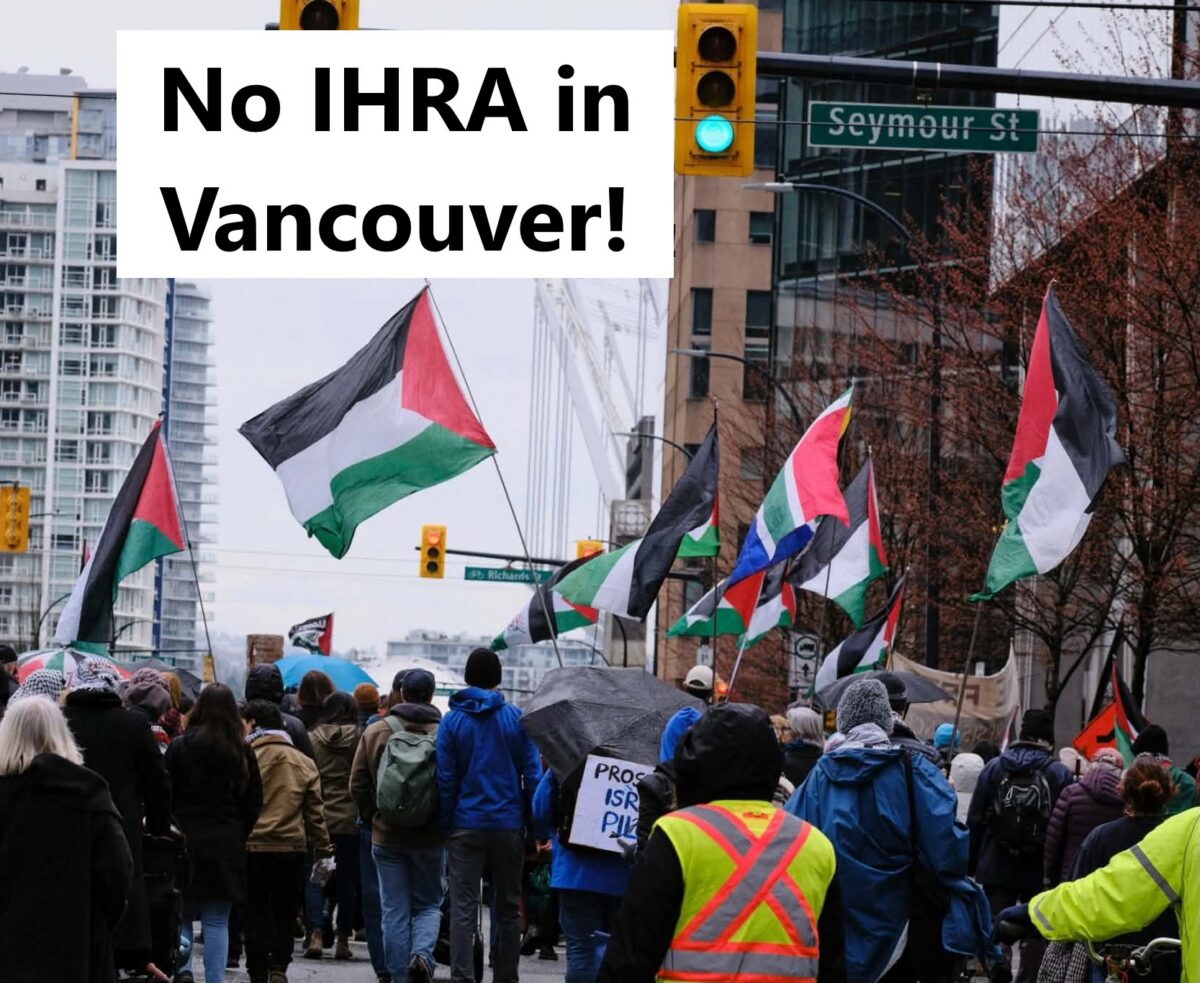
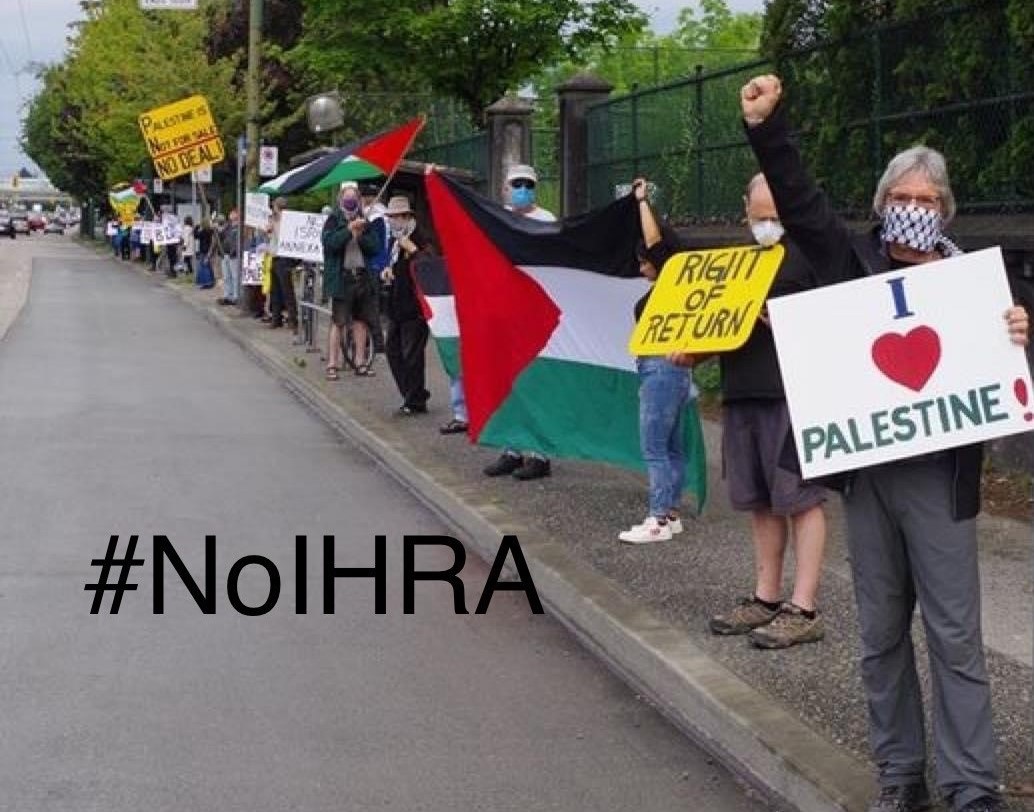
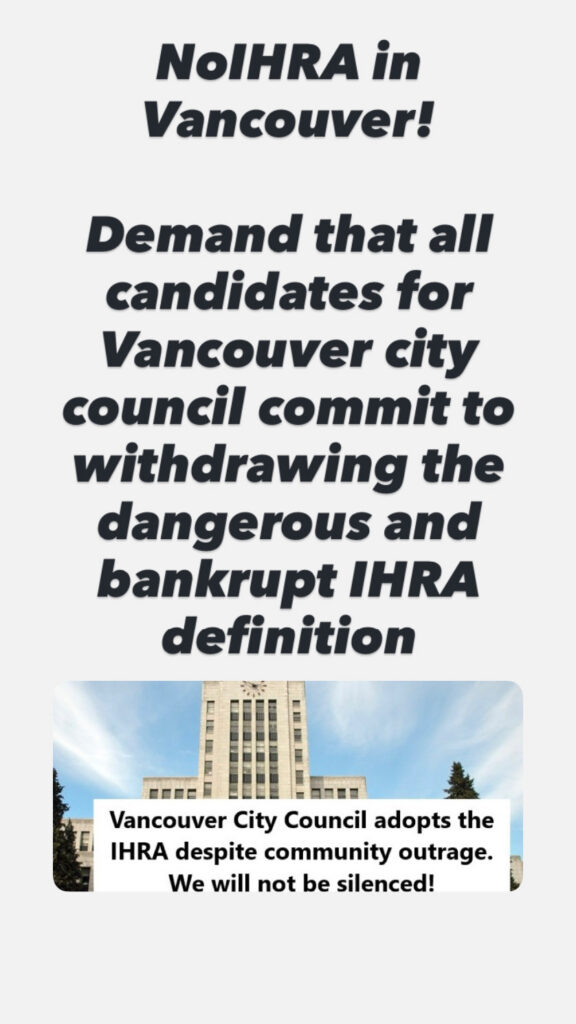
Canada Palestine Association, and many others, warned several years ago that this would be the inevitable outcome of normalizing the dangerous IHRA definition. In December of 2022, after the newly elected Ken Sim pushed through adoption of the IHRA at Vancouver City Council, we published an article on our website which said:
“The main objective of the IHRA definition is to legitimize Israel and to slander all those who expose its illegal and inhumane activities, putting a chill on the Palestinian solidarity work and covering up for Israeli war crimes.
The Israeli Hasbara 3D’s are at work: it distorts the nature of the Palestinian struggle, it distracts from the settler colonialist nature of Zionism, and defames as anti-Semites all those who expose and condemn Israeli atrocities.”
And now that this has been codified by the federal government, we can expect other levels of government to follow suit. This is why we have always maintained that the IHRA definition is not just bankrupt but dangerous. And why we insisted over a month ago in our first comment on upcoming municipal elections that it was crucial to “Demand that all candidates for Vancouver city council commit to withdrawing the dangerous and bankrupt IHRA definition.” This is a straight-forward yes or no demand to all candidates, and something concrete that could significantly impact the Palestinian community and its supporters.
These attempts by the Zionist lobby to smear Palestinian advocacy as anti-Semitic are the desperate throes of those who know they have lost the support of public opinion.
Musicians, sports figures, anyone who voices support for Palestine are portrayed as anti-Semitic. Not only is it ludicrous but it also debases the real fight against all forms of racism, including anti-Jewish racism.
In the UK, professor David Miller recently won his case against his dismissal from Bristol University when the tribunal ruled “that anti-Zionism is a legally protected belief in the United Kingdom.”
The Canadian government is on the wrong side of history on this issue, as they are on so many others. We refute this characterization of anti-Zionism and refuse to be told as Palestinians that we cannot condemn this ideology that dispossessed our whole nation and people and continues to implement our ethnic cleansing and genocide!
We are obliged to be anti-Zionist; with every fibre of our being, we will continue to resist the supremacist settler colonialist ideology that insists we are marginal and non-existent. We would ask no less of any indigenous peoples fighting for their very survival.
And finally, we tell the Zionists in the Canadian government that you are anti-Palestinian racists. Palestinians and our supporters all over the world will condemn you as such, and remember you as the bigots you are.
(Check out our “I am an anti-Zionist” video clips campaign)